News & Developments
United States Supreme Court
Apr 24, 2024
Supreme Court Roundup: Justices Hear Oral Arguments on Ineffective Assistance of Counsel, Cruel and Unusual Punishment; Defend Positions on Stays
On April 17, the Supreme Court heard oral arguments in Thornell v. Jones, a case implicating the test for ineffective assistance of counsel — and the first and only oral argument in a death penalty case scheduled this term. Arizona appealed the Ninth Circuit’s decision vacating the death sentence of Danny Lee Jones, which found that Mr. Jones was prejudiced by his attorney’s failure to present key mitigating evidence as to Mr. Jones’ brain damage, childhood physical and sexual abuse, and psychiatric problems. The case marks the second time the Supreme Court…
Read More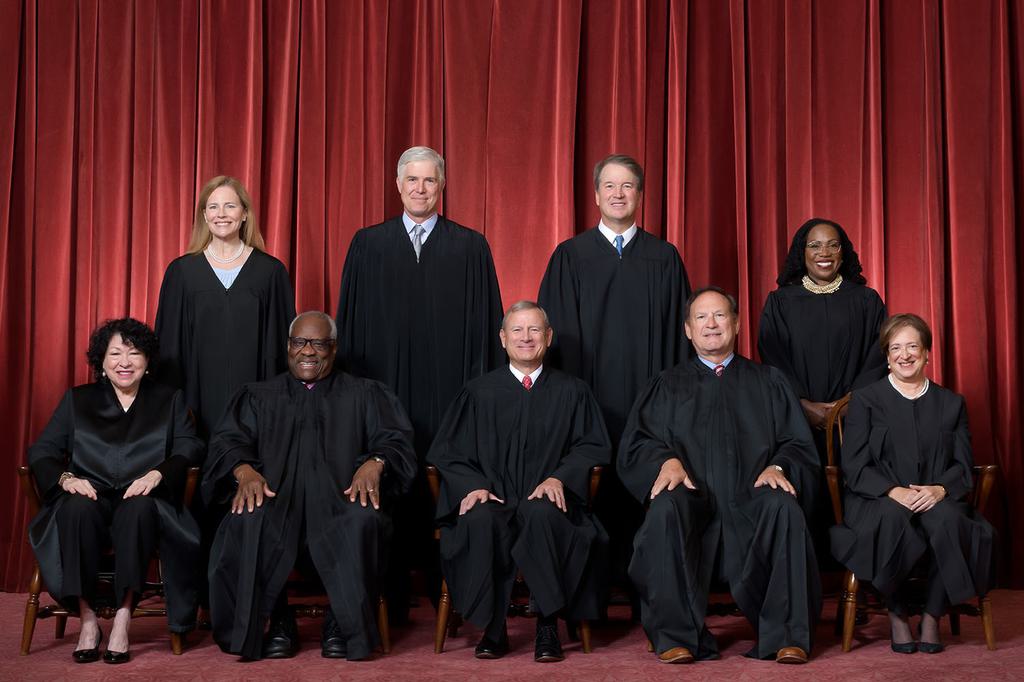
Lethal Injection
Apr 23, 2024
Articles of Interest: Reprieve Issues New Report on Botched Executions and Racial Disparities
A new report issued April 17, 2024 by the UK-based international human rights organization Reprieve found racial disparities in the occurrence of botched executions in the United States. As reported in The Guardian, Reprieve analyzed all lethal injection executions between 1976 and 2023. It chronicled 73 confirmed botched procedures and found that 8% of executions of Black people were botched (37 times out of 465 executions), compared with 4% for white people (28 out of 780).
Read More
Methods of Execution
Apr 22, 2024
Louisiana Senate Committee Approves Legislation Supported by Jewish Community to Remove Nitrogen Hypoxia as Possible Method of Execution
On April 16, 2024, the Louisiana Senate Judiciary B Committee unanimously voted to advance a bill that would remove nitrogen hypoxia from the state’s available methods of execution. Introduced by state Senator Katrina Jackson-Andrews, Senate Bill 430 is supported by the Jews Against Gassing Coalition, an organization consisting of Jewish Louisiana residents who oppose state-sanctioned gas executions. “We recognize, of course, that the gassing of innocent victims in the Holocaust is quite different from executing a convicted criminal,” said Naomi Yavneh-Klos, a member of the coalition and Loyola University professor.…
Read More
Human Rights
Apr 18, 2024
United States Provides Binding Assurances to the United Kingdom that Julian Assange Will Not Face the Death Penalty If Extradited
On April 16, 2024, the Biden Administration provided assurances to the United Kingdom that WikiLeaks founder Julian Assange, who is facing extradition to the United States on espionage charges, would not face the death penalty. A hearing is now scheduled in London on May 20 to evaluate the assurances and decide whether Mr. Assange has any remaining legal recourse. A few weeks earlier, the High Court in London granted Mr. Assange a reprieve from extradition, agreeing to grant him an appeal if the United States was unable to provide assurances that…
Read More
United States Supreme Court
Apr 17, 2024
Justices Sotomayor and Jackson Issue Dissents Over Supreme Court’s Refusal to Review Two Capital Misconduct Cases
On Monday, April 15, Justices Ketanji Brown Jackson and Sonia Sotomayor issued dissents over the Supreme Court’s refusal to hear the petitions of two death-sentenced prisoners who alleged official misconduct in their cases. In the first case, Dillion Compton alleged that Texas prosecutors illegally used thirteen of their fifteen peremptory strikes to remove female prospective jurors because of their gender. In the second case, Kurt Michaels argued that California police officers unlawfully continued to question him after he invoked his Miranda rights, leading Mr. Michaels to eventually confess, and his confession…
Read More
Prosecutorial Accountability
Apr 16, 2024
Trial Judge Signs Agreed Findings of Fact and Conclusions of Law, Recommending Melissa Lucio’s Conviction and Death Sentence Be Overturned
On April 12, 2024, Judge Arturo Nelson signed an Agreed Findings of Fact and Conclusions of Law submitted by the prosecution and defense stating that Melissa Lucio (pictured) was not given access to favorable information in the prosecution’s possession at the time of trial. The acknowledgement of this constitutional error resulted in Judge Nelson’s recommendation to the Texas Court of Criminal Appeals (TCCA) that Ms. Lucio’s conviction and death sentence be overturned. The ruling marks the latest chapter in a saga that saw Ms. Lucio narrowly avoid an execution date…
Read More
Race
Apr 15, 2024
Wilbert Rideau, former Louisiana Death-Sentenced Prisoner, is Honored for Extraordinary Journalism During 44 Years at Angola Prison
On April 12, 2024, Long Island University celebrated the 2023 George Polk Awards in Journalism, honoring investigative journalists and recognizing sixteen former winners, including formerly death-sentenced prisoner Wilbert Rideau. Mr. Rideau spent forty-four years incarcerated in Louisiana’s Angola State Penitentiary where he created The Lifer, one of the first Black prison periodicals. Sentenced to death in 1961 at age nineteen, Mr. Rideau spent twelve years on death row before the United States Supreme Court’s decision in Furman v. Georgia (1972), which struck down Louisiana’s capital punishment scheme. Mr. Rideau was…
Read More
Secrecy
Apr 12, 2024
John Oliver’s “Last Week Tonight” Criticizes Execution Secrecy Laws and “Sketchy” Procurement of Pentobarbital by Federal Government
During the April 7, 2024, episode of “Last Week Tonight,” host John Oliver focused on “grim developments” in the death penalty since his last segment covering lethal injection in 2019. Since then, 91 people have been executed, including 13 federal prisoners during former President Donald Trump’s administration. “Our federal and state governments have continued to pursue questionably legal and definitely horrifying ways, that, again, I would argue they shouldn’t be doing at all,” Mr. Oliver asserted. He explained that the increased difficulty in obtaining drugs required for lethal injection has…
Read More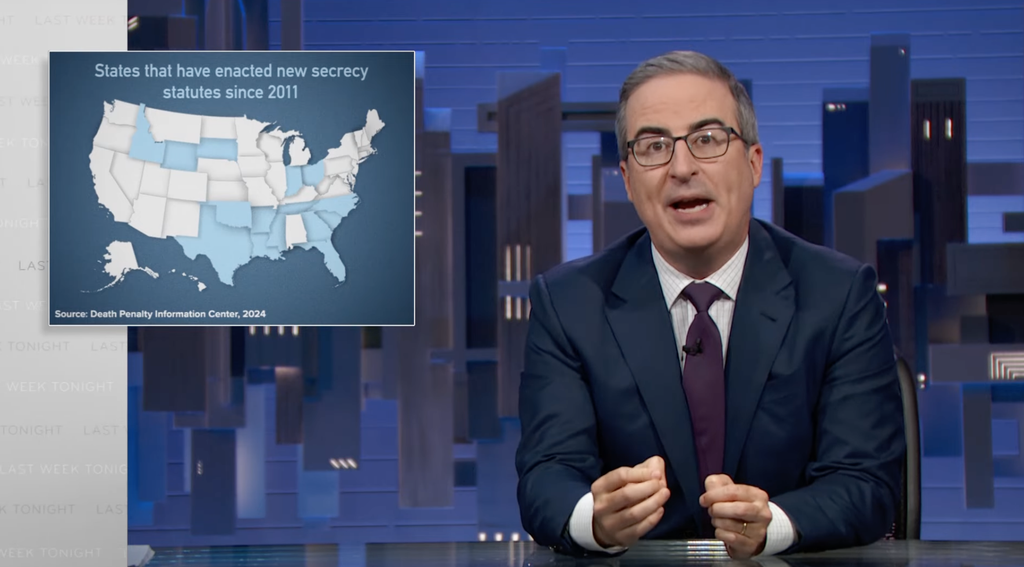
Prosecutorial Accountability
Apr 11, 2024
Rare Agreement Between District Attorney and Defense Counsel Acknowledge Prosecutorial Misconduct and Need for New Trial for Melissa Lucio
On April 5, 2024, Cameron County District Attorney Luis Saenz and Innocence Project attorney Vanessa Potkin released a joint statement regarding Melissa Lucio’s case, which has been pending additional review for almost two years. On January 11, 2023, the parties submitted an Agreed Findings of Fact and Conclusions of Law stating that the defense was not given access to favorable information in the prosecution’s possession at trial, an error that they agree should entitle Ms. Lucio to a new trial. “Under Texas procedure the trial court must make a recommendation…
Read More
Race
Apr 10, 2024
Lawsuit Filed at the California Supreme Court Alleges Racist Application of the Death Penalty Violates the State Constitution
On April 9, 2024, the California Office of the State Public Defender, along with several civil rights groups, filed an extraordinary writ petition at the California Supreme Court arguing that the state’s capital punishment system violates the state’s Constitution because of its racially biased implementation. In 2021, the California Committee on Revision of the Penal Code confirmed that racial bias is entrenched in the state’s death penalty system. “The California Constitution does not permit a two-tiered system of justice where the most severe sentence the state has on its books…
Read More