DPI Report: Behind the Curtain
Secrecy and the Death Penalty in the United States

Overview
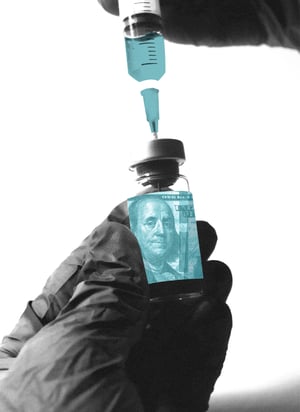
All death penalty states, the military, and the federal government authorize lethal injection as a method of execution. Jurisdictions use a variety of execution protocols using one or more drugs. Most three-drug protocols use an anesthetic or sedative, followed by a drug to paralyze the prisoner, and finally a drug to stop the heart. One and two-drug protocols typically use an overdose of an anesthetic or sedative, such as pentobarbital, to cause death.
Although the constitutionality of lethal injection has been upheld by the United States Supreme Court, many of the specific applications are being legally challenged. Because it is increasingly difficult to obtain legally the drugs commonly used in executions, some states have experimented with new drugs and different drug combinations to carry out executions, resulting in prolonged executions in which prisoners exhibited symptoms of pain and distress. The difficulty obtaining drugs for lethal injection has also driven up the costs.
Even though the issues surrounding lethal injection are far from settled, some states have attempted to cut off debate by concealing their execution practices under veils of secrecy. Laws passed over the past decade explicitly prevent the public from learning the provenance of lethal drugs, making it impossible to assess their reliability and efficacy.
DPI has compiled summaries of available information regarding the methods of execution currently authorized and the drugs used in executions over the past ten years. DPI’s report, Behind the Curtain covers the execution secrecy laws that have been imposed in many states. Statements from various pharmaceutical companies barring the use of their drugs in executions are also provided.
News & Developments
News
Oct 26, 2026
Newly Obtained Records Reveal Tennessee Spent $1.2 Million for Lethal Injection Drugs, Despite Failed Execution Attempts

Reporting from The Tennessean has revealed that since January 2023, Tennessee officials have spent nearly $1.2 million on drugs for lethal injection executions, despite failing to carry out two of its last three scheduled executions in 2026. Records obtained by the outlet indicate the Tennessee Department of Correction has made two payments since January 2023 related to lethal injection drugs: one payment for $525,000, and the other for $650,000. The records do not offer any information about…
Read MoreNews
Oct 08, 2026
Tennessee Court Orders Officials to Preserve Evidence from Failed Execution of Christa Pike, As She Regains Consciousness
On October 7, a Tennessee judge issued a broadly worded order requiring the state to preserve all evidence from the failed September 30 execution attempt of Christa Pike. Her attorneys reported on October 6 that she has regained consciousness and is speaking, although her overall prognosis remains uncertain. Davidson County Chancery Court Judge I’Ashea Myles granted a motion filed by Ms. Pike’s legal team, which sought to prevent the loss of records and physical evidence from the botched…
Read More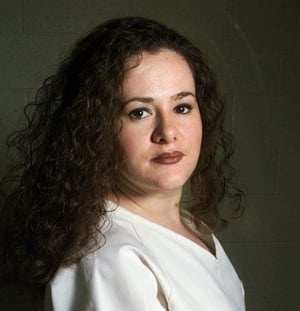
News
Oct 01, 2026
Tennessee Botches Another Execution Despite Earlier Warnings from Attorneys; Christa Pike Was Alive Hours After Attempt Began
Christa Pike remained alive more than an hour after the state of Tennessee began its attempt to execute her on September 30, 2026. It was the latest in a series of troubled executions by the Tennessee Department of Corrections. At a press conference outside the prison, media witnesses sharing their observations were interrupted by emergency vehicles arriving to take Ms. Pike to a local hospital. As outlined in the new execution protocol, Tennessee prison officials administered two doses of…
Read More
News
Sep 24, 2026
William Thompson Faces Execution in Florida Amid Dementia, Terminal Illness Concerns
UPDATE: On September 25, counsel for William Thompson filed a new federal lawsuit in the Middle District of Florida, accusing several state actors and prison healthcare providers of denying Mr. Thompson of his “constitutional right to adequate medical care.” The lawsuit does not challenge Mr. Thompson’s death sentence or scheduled execution but rather asks the federal court to require that the named officials provide constitutionally required medical care for Mr. Thompson. The lawsuit asks for…
Read More
News
Sep 17, 2026
Article of Interest: Georgia Records Reveal Rising Costs and Continued Secrecy Around Lethal Injection
The state of Georgia planned to execute Stacey Humphreys by lethal injection on September 16, 2026, but Cobb County Superior Court Judge Tyler Browning issued a stay that was upheld by the Georgia Supreme Court citing the Georgia Survivor Justice Act — a state law that allows the courts to consider a defendant’s history of abuse and trauma in sentencing. Mr. Humphreys’ execution would have marked Georgia’s first execution in two years. Critics have long raised concerns about Georgia’s lethal…
Read More