
Ninth Annual Thurgood Marshall Journalism Awards Announced
NEW YORK ASSEMBLYMAN KEYNOTES NATIONAL PRESS CLUB EVENT
![]() |
| DPIC Executive Director, Richard Dieter opening remarks |
FOR IMMEDIATE RELEASE Contact: BRENDA BOWSER SODER
(202) 289-2275, (301) 906-4460 – cell, bbsoder@deathpenaltyinfo.org
The Death Penalty Information
Center (DPIC) honored journalists from The
Birmingham News and The Chicago Tribune, and directors from Big Mouth
Productions during its 9th Annual Thurgood Marshall Journalism Awards
at the National Press Club on Monday, July 25. The awards recognize
those journalists who have made an exceptional contribution to the
understanding of problems associated with capital punishment.
![]() |
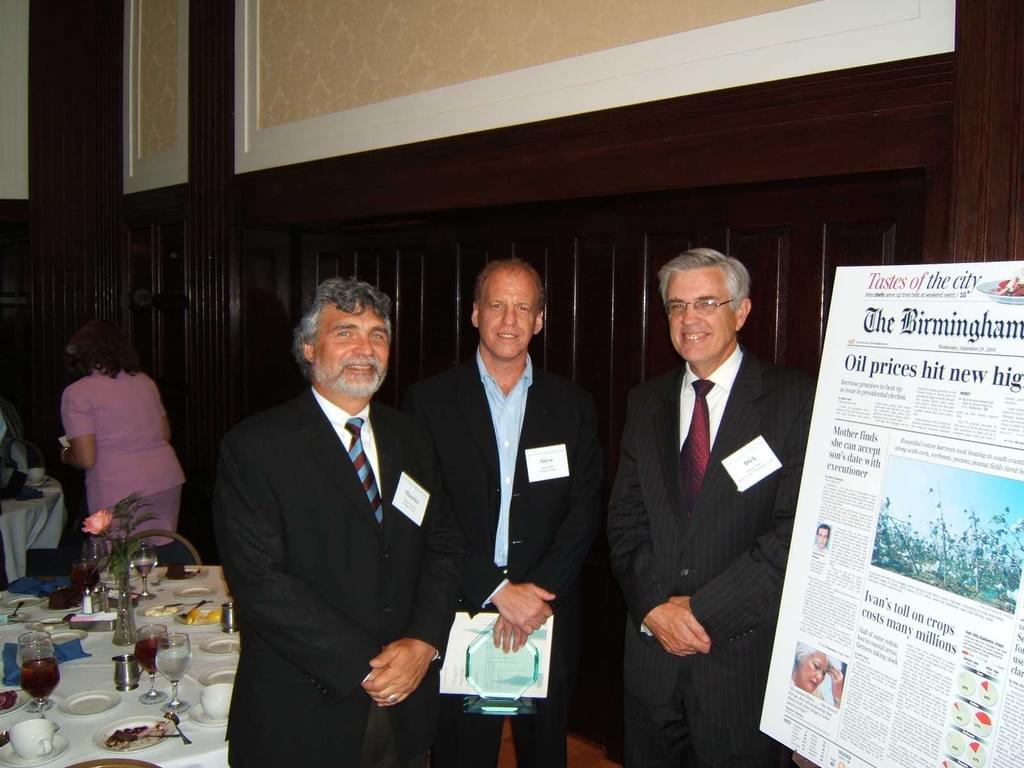
| (LtoR) Maurice Possley, Steve Mills, Richard Dieter |
This year’s ceremony featured the first-ever Thurgood Marshall
Journalism Award for Excellence in the Posthumous Exploration of
Innocence. The honor was given to Chicago Tribune reporters Steve Mills
and Maurice Possley for their article about the capital conviction of
Cameron Todd Willingham, who was executed in Texas last year.
Willingham had been convicted and sentenced to death for the arson
murder of his three daughters, but had maintained his innocence since
his arrest. An investigation of the state’s case against Willingham
revealed that his conviction was based primarily on arson theories that
have since been repudiated by scientific advances.
![]() |
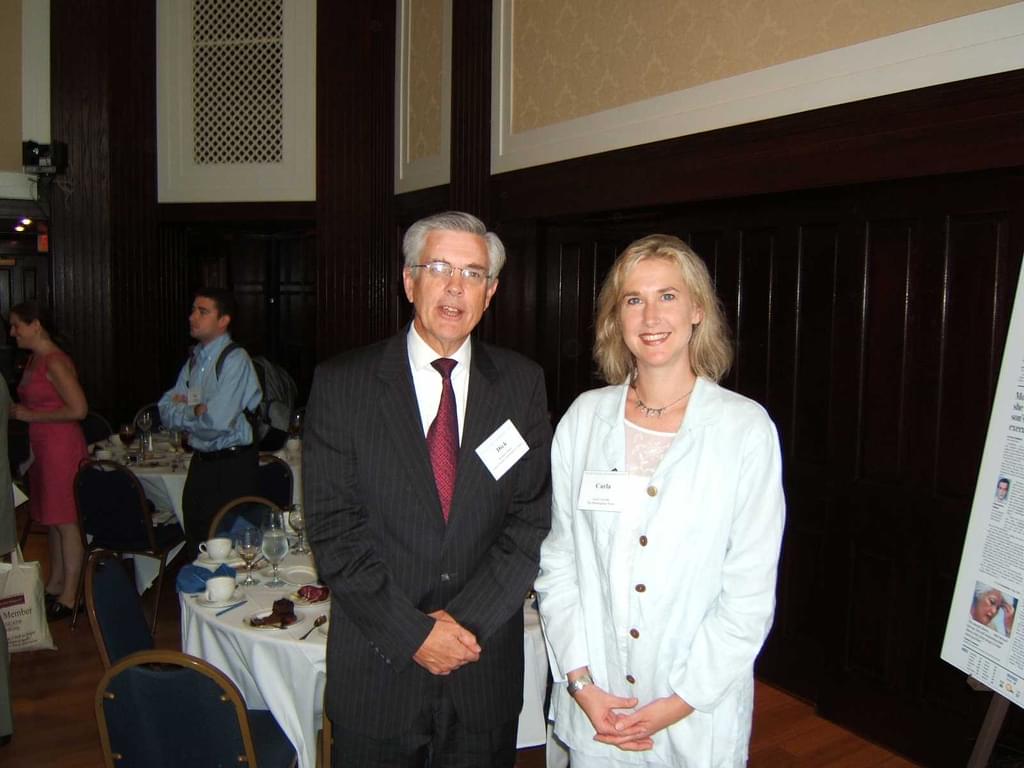
| Richard Dieter & Carla Crowder |
The Award for Excellence in Print Journalism was given to Carla
Crowder, a reporter with The Birmingham News. Crowder received the
honor for her achievements in giving voice to both sides of the death
penalty debate in Alabama. Crowder’s articles have profiled the
individual life histories of the executed, the economic and personal
struggles faced by those who have been exonerated from death row, and
the stories of those who continue to await their executions. In 2004,
Crowder wrote about the life of David Hocker, who was executed in
Alabama late last year. Hocker was convicted of capital murder after a
one-day trial, sentenced to death after his attorney presented no
mitigation evidence, and was executed with no post-conviction review.
In her series on Hocker, Crowder did what no attorney or social worker
had ever done before: tell Kevin Hocker’s life story.
![]() |
| (LtoR) Katy Chevigny, Richard Dieter & Kirsten Johnson |
Directors
Katy Chevigny and Kirsten Johnson of the New York-based Big Mouth
Productions received the Award for Excellence in Broadcast
Journalism for their documentary “Deadline.” This film, which was
featured last year by Dateline NBC, gave viewers a first-hand look at
the emotional events surrounding former Illinois Governor George Ryan’s
historic decision to pardon four men and offer clemency to the
remaining 167 people on the state’s death row due to his concerns about
the fairness and accuracy of Illinois’s death penalty. Though he had
been a tough-on-crime death penalty supporter for nearly two decades,
Ryan’s opinion about capital punishment was shaken when he watched a
group of journalism students discover evidence that exonerated a man
from death row just before his scheduled execution. In the film,
Chevigny and Johnson give viewers an insider’s look at Ryan’s
courageous actions and America’s death penalty debate.
![]() |
| Richard Dieter shakes hands with Assemblyman Joseph Lentol |
New
York Assemblyman Joseph Lentol delivered the keynote address at the
awards luncheon. Earlier this year, Lentol, who is Chair of the
Assembly’s Committee on Codes, played a pivotal role in the committee’s
historic vote not to reinstate capital punishment in New York. A former
death penalty proponent, Lentol’s position on the issue began to evolve
after the state’s statute was declared unconstitutional in 2004 and the
Assembly held a series of public hearings to determine the best course
of action regarding the future of capital punishment in New York.
![]() |
| The 2005 Thurgood Marshall Journalism Awards Luncheon |
The
Thurgood Marshall Journalism Awards are named in honor of the late
Supreme Court
Justice who believed that people would see the death
penalty in a new light once they understood how it works in practice.
“The question with which we must deal,” Justice Marshall wrote, “is not
whether a substantial proportion of American citizens would today, if
polled, opine that capital punishment is barbarously cruel, but whether
they would find it to be so in light of all information presently
available.”
The distinguished judges for this year’s Awards were Loren Ghiglione,
Dean of the Medill School of Journalism at Northwestern University, and
Virginia Sloan, President of The Constitution Project.
Among the previous winners of the Thurgood Marshall Journalism Awards
are the producers of the television series “The Practice,” ABC-TV’s
“Nightline,” documentary film-markers Liz Garbus and Jonathan Stack,
and writers for The Tennessean, the Richmond Times-Dispatch, the Dallas
Morning News, and the New York Times Magazine.
Entries for next year’s awards must be published or produced in 2005
and should be submitted to the Death Penalty Information Center by
January 31, 2006.
Return to Thurgood Marshall Journalism Awards
- 1370 reads


