Overview
The Supreme Court is the final arbiter of whether the constitution is being followed. States may be more protective of individual rights than required under the federal constitution, but they cannot be less protective. In particular, the Supreme Court is responsible for ensuring that state use of the death penalty adheres to our fundamental rights. Court rulings can involve the methods of execution used, the competency of defense counsel, the selection of juries, the behavior of the prosecution, and many other matters protected by the right to due process.
In the earlier history of the country, the Supreme Court left much of the practice of the death penalty and other punishments to the states’ discretion, rarely ruling on whether any practice should be considered cruel and unusual. In recent decades, the Court has regularly considered multiple capital cases each term. Some of these cases arise from appeals of state rulings involving the U.S. constitution, others are result of federal decisions on both state and federal death penalty matters.
At Issue
The key question for the Supreme Court is whether the death penalty itself continues to be constitutional in light of its rare use and its rejection by large segments of society. Recent revelations about the risks of executing innocent defendants, racial bias in its application, and the lengthy time inmates spend on death row, has led society to rethink its support of the death penalty. Some Justices have called for a comprehensive review of the practice. The make-up of the Court is likely to determine when such a case might be considered and how the Court will rule.
What DPIC Offers
DPIC has summaries of the important death penalty cases decided by the Supreme Court in the modern era. The opinions of individual Justices on the practice of the death penalty in the U.S. are highlighted. Cases that the Court has decided to hear but have not yet been argued are previewed on the website.
News & Developments
News
Aug 05, 2021
Presidential Commission Hears Recommendations for Reforms to Supreme Court’s Death-Penalty Practices

Legal reform advocates and a committee of high-profile Supreme Court practitioners have urged the Presidential Commission on the Supreme Court of the United States to recommend changes in the way the Court handles emergency applications for stays of executions in death-penalty cases.
Read MoreNews
May 07, 2024
In Amicus Briefs, Conservative Officials, Oklahoma Lawmakers, and Civil Rights Groups are United in Urging the U.S. Supreme Court to Vacate Richard Glossip’s Conviction
On April 30, 2024, a week after the parties in Glossip v. Oklahoma filed merits briefs at the United States Supreme Court, several amici filed briefs in support of the parties’ joint position, asking the Court to grant Richard Glossip (pictured) a new trial. Ken Cuccinelli, the former Virginia Attorney General and Deputy Secretary of Homeland Security under President Donald Trump, said in his brief that the consequences of failing to overturn Mr. Glossip’s conviction are “most dire.” During his tenure as Virginia’s Attorney General, Mr. Cuccinelli’s office “routinely reviewed…
Read More
News
Apr 24, 2024
Supreme Court Roundup: Justices Hear Oral Arguments on Ineffective Assistance of Counsel, Cruel and Unusual Punishment; Defend Positions on Stays
On April 17, the Supreme Court heard oral arguments in Thornell v. Jones, a case implicating the test for ineffective assistance of counsel — and the first and only oral argument in a death penalty case scheduled this term. Arizona appealed the Ninth Circuit’s decision vacating the death sentence of Danny Lee Jones, which found that Mr. Jones was prejudiced by his attorney’s failure to present key mitigating evidence as to Mr. Jones’ brain damage, childhood physical and sexual abuse, and psychiatric problems. The case marks the second time the Supreme Court…
Read More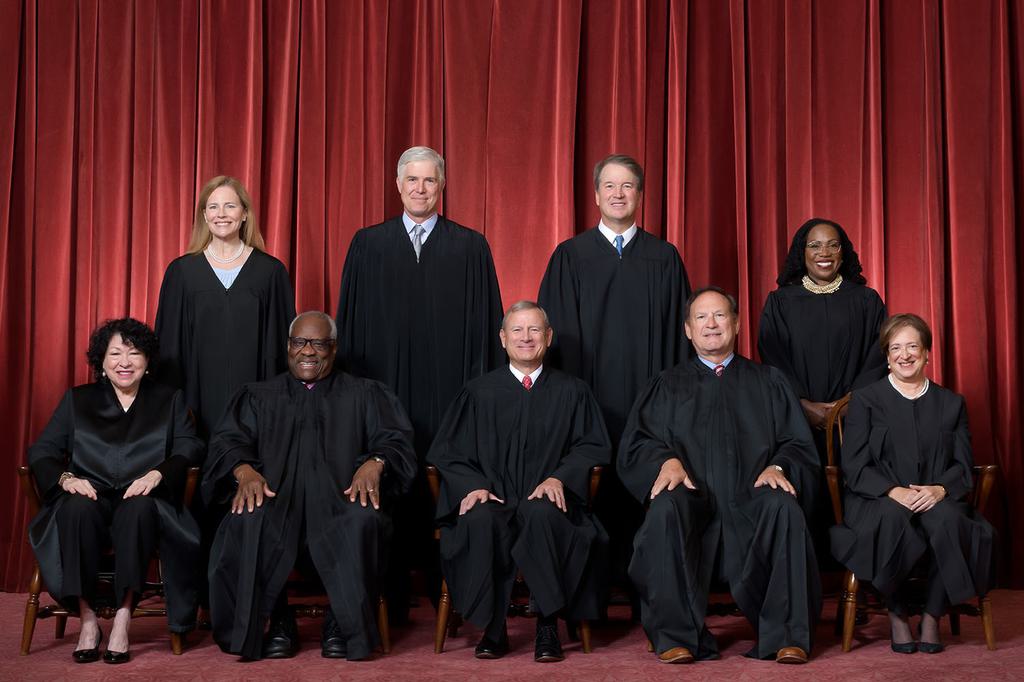
News
Apr 17, 2024
Justices Sotomayor and Jackson Issue Dissents Over Supreme Court’s Refusal to Review Two Capital Misconduct Cases
On Monday, April 15, Justices Ketanji Brown Jackson and Sonia Sotomayor issued dissents over the Supreme Court’s refusal to hear the petitions of two death-sentenced prisoners who alleged official misconduct in their cases. In the first case, Dillion Compton alleged that Texas prosecutors illegally used thirteen of their fifteen peremptory strikes to remove female prospective jurors because of their gender. In the second case, Kurt Michaels argued that California police officers unlawfully continued to question him after he invoked his Miranda rights, leading Mr. Michaels to eventually confess, and his confession…
Read More
News
Mar 22, 2024
Women’s History Month Profile Series: Carol Steiker, Harvard Law School Professor
This month, DPIC celebrates Women’s History Month with weekly profiles of notable women whose work has been significant in the modern death penalty era. The third entry in this series is Harvard Law School Professor Carol Steiker, a renowned educator and influential death penalty scholar.
Read More
News
Jan 22, 2024
Supreme Court Agrees to Hear Richard Glossip’s Appeal: High-Profile Innocence Case Where the State Supports Relief
On January 22, the Supreme Court granted certiorari to Richard Glossip, sentenced to death in Oklahoma, whose innocence case has received international attention. Mr. Glossip’s execution had been scheduled for May 18, 2023, before the Court issued a stay on May 5 pending the outcome of his petitions for certiorari. Mr. Glossip’s case is unusual in that the State of Oklahoma conceded error and supports his request for a new trial. However, Mr. Glossip was forced to petition the Supreme Court when the Oklahoma Court of Criminal Appeals rejected a…
Read More
News
Dec 15, 2023
Supreme Court Agrees to Second Review of Arizona Death Penalty Case on Arizona’s Request
On Wednesday, December 13, the U.S. Supreme Court granted certiorari in Thornell v. Jones, its first death penalty case to be heard at oral argument in the 2023 term. Unlike most death penalty cases that seek Supreme Court review, the petitioner here is the state of Arizona, which asks the Court to reverse the Ninth Circuit’s grant of relief for death-sentenced prisoner Danny Lee Jones (pictured). The Ninth Circuit held that Mr. Jones demonstrated ineffective assistance of counsel at his sentencing phase under Strickland v. Washington (1984). So far this…
Read More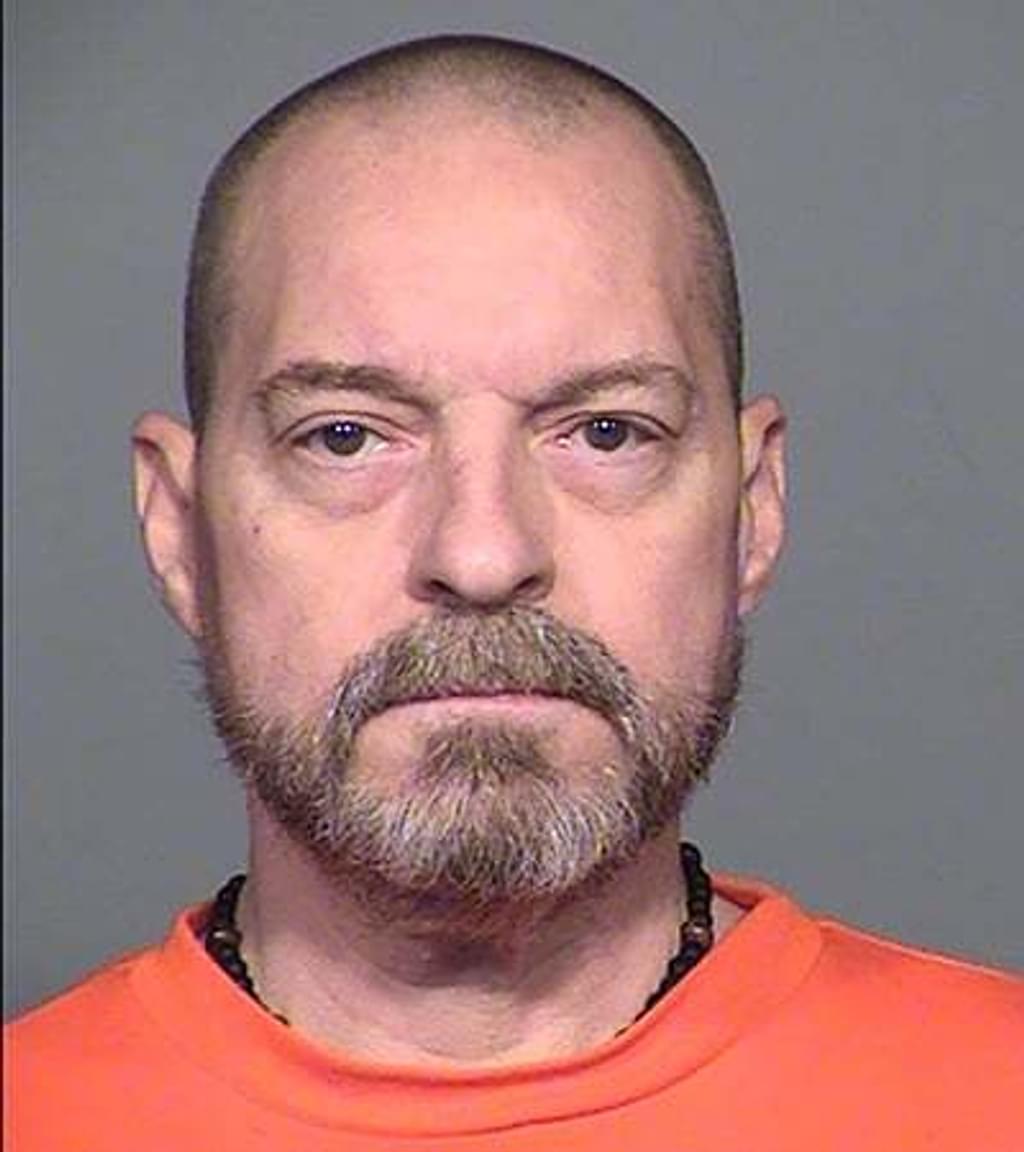
News
Dec 05, 2023
Justice Sandra Day O’Connor’s Conflicted Death Penalty Jurisprudence
Justice Sandra Day O’Connor, the first woman to sit on the United States Supreme Court, died at the age of 93 on December 1, 2023. In her 25-year tenure on the Court, Justice O’Connor authored opinions in several landmark death penalty cases, including decisions that upheld the use of the death penalty for vulnerable groups and people with diminished culpability. However, she demonstrated an early interest in improving capital defense standards, and in her later years on the Court expressed concerns that the country had executed innocent people. Her legislative…
Read More
News
Nov 02, 2023
Under Recent State Legislation, Courts in Ohio and Kentucky Rule Four Men Ineligible for Execution Due to Serious Mental Illness
Though the Supreme Court has ruled that the Constitution forbids the death penalty for a person who is “insane” at the time of execution, it has never held that the execution of people with serious mental illness is unconstitutional. Experts have found that two in five people executed between 2000 and 2015 had a mental illness diagnosis such as bipolar disorder, schizophrenia, or PTSD. Since 2017, at least eleven states have attempted to strengthen protections for vulnerable prisoners by introducing bills barring the execution of those with serious mental illness…
Read More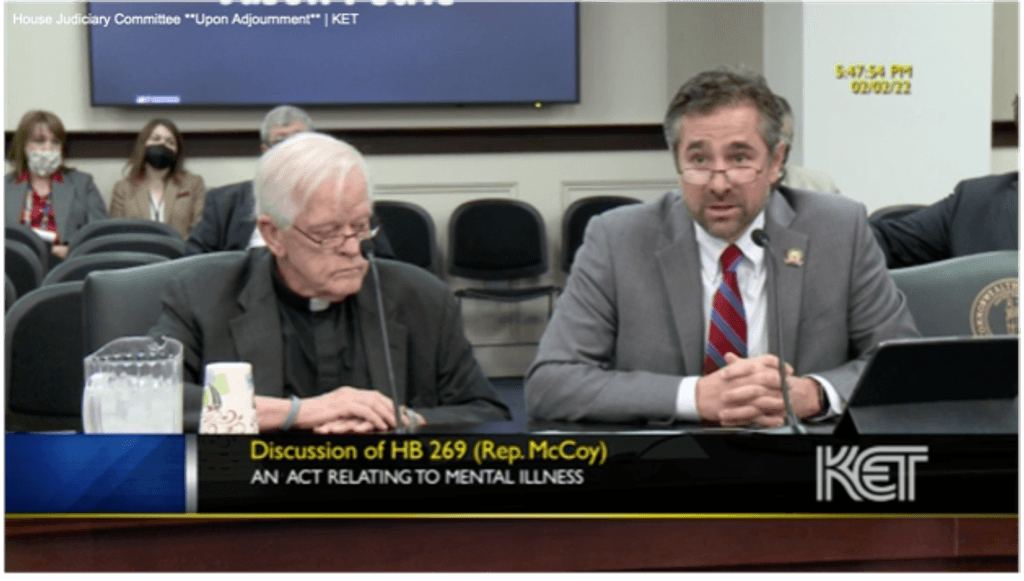
News
Oct 31, 2023
SCOTUS Denies Review to Texas Prisoner Sentenced to Death with Contested Junk Science
On October 30, 2023, the United States Supreme Court denied Texas death-sentenced prisoner Brent Brewer’s (pictured) petition for certiorari, clearing the way for his scheduled execution on November 9th. Mr. Brewer’s attorneys argue that unreliable “future dangerousness” junk science testimony from a psychiatrist who never even met Mr. Brewer resulted in his death sentence. Following the Supreme Court’s decision, attorneys for Mr. Brewer submitted a clemency application, detailing the fact that one of his jurors did not want to sentence him to death. The application also details Mr. Brewer’s good…
Read More
News
Oct 13, 2023
New Legal Research Declares “Heightened Standards” of Due Process in Capital Cases an “Illusion”
In a new law review article, Professor Anna VanCleave of the University of Connecticut School of Law argues that the “heightened standards” of due process protection for capital defendants, required under the Eighth Amendment, are in practice no more than “a veneer of legitimacy and procedural caution” that fail to vindicate defendants’ rights. Professor VanCleave found that in the absence of clear guidance from the Supreme Court as to the actual meaning of “heightened standards,” lower courts apply the same standards used in non-capital criminal cases or even relax rules…
Read More