Innocence
Partial Innocence – Sentence Reduced
Some defendants, though not exonerated completely, have been released from death row after having been cleared of their capital offense. Generally, these cases involve defendants whose convictions have been overturned but who then plead guilty or no-contest to a lesser charge to obtain their freedom without risking receiving another death sentence or a lengthy prison term or remaining imprisoned throughout the entire retrial process, even if they are eventually acquitted.
Unlike those on DPI’s exoneration list, the law considers them technically guilty of some lesser offense related to the original crime, even if they may be factually innocent. DPI estimates that there are dozens of actually innocent or likely innocent former death-row prisoners who took some form of plea to offenses they did not commit, in order to finally secure their freedom. The list below highlights a significant number of these cases, but is not an exhaustive compilation.
Lamont Hunter
Ohio — Conviction: 2007, Released: 2023
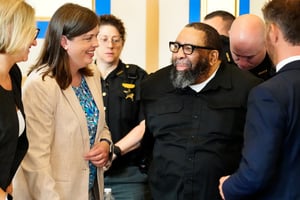
On June 15, 2023, Ohio death-sentenced prisoner Lamont Hunter was released after serving nearly 18 years for allegedly causing the death of his 3‑year-old son, Trustin Blue. To obtain his freedom, he pleaded guilty to lesser charges of involuntary manslaughter and child endangerment. Prosecutors agreed to offer a plea deal after Hamilton County Common Pleas Court Judge Christian A. Jenkins set bond for Mr. Hunter and dismissed prosecutors’ request to deny his bond.
Mr. Hunter was convicted and sentenced to death in 2007 on charges of aggravated murder, child endangerment, and rape in the death of his son who suffered fatal injuries after accidentally falling down the stairs. In his appeal, his attorneys argued that newly discovered evidence cast doubt on the prosecution’s theory that Mr. Hunter caused Trustin’s injuries. In March 2023, the prosecutors agreed to a new trial and vacated his capital convictions because the deputy coroner who initially ruled the death as homicide changed her opinion in a 2021 deposition. Based on her review of evidence that she was not previously given at trial, she testified that the cause of death was undetermined and the injuries she had attributed to sexual assault were accidentally inflicted at the hospital.
During last week’s hearing, Judge Christian A. Jenkins imposed a sentence of time served that was agreed upon as part of the plea deal. Mr. Hunter’s attorney, Erin Barnhart, said, “Trustin was in his care. He accidentally fell down the stairs. Lamont knows that, in a way, he’s responsible − he was the caregiver. But he never harmed Trustin. He loved Trustin.” Assistant Prosecutor Seth Tieger appreciated Mr. Hunter’s accountability by stating “that went a long way with us.”
(Kevin Grasha, Lamont Hunter pleads guilty to involuntary manslaughter in 2006 death of 3‑year-old boy, Cincinnati Enquirer, June 15, 2023.)

Barry Jones
Arizona — Conviction: 1995, Released: 2023
Barry Jones was incarcerated for 29 years after being convicted of murdering his girlfriend’s four-year-old daughter. Medical evidence that was readily available at the time of trial showed that the child did not sustain her fatal internal injuries during the time while she was in Mr. Jones’s care. But this evidence was not discovered by either his trial attorney or his state post-conviction attorney.
In 2018, Mr. Jones presented this evidence for the first time in federal court as proof that his state counsel had been ineffective for failing to investigate and present medical evidence that contradicted the prosecution’s timeline. Both the federal district court and the Ninth Circuit Court of Appeals agreed he was entitled to a new trial; however in 2022, the U.S. Supreme Court ruled against him in Shinn v. Ramirez, prohibiting him from introducing any evidence in federal court that was not already on the state record.
While Shinn is still the law of the land, and criminal defendants for both capital and non-capital crimes now have a much more limited path for federal judicial review, the decision did not bar the Arizona Attorney General’s Office from independently reviewing the case. After doing so, the office agreed to a settlement agreement that had Mr. Jones pleading guilty to second-degree murder — for failing to take his girlfriend’s daughter to a hospital while she was in his care and already suffering from her fatal internal injury — in exchange for which he was released from prison for time served.
(Read the Pima County Order Granting Relief here. Elena Santa Cruz, Lawyer: Arizona death row inmate free after 29 years for a crime he did not commit, AZ Central, June 15, 2023.)

Johnny Lee Gates
Georgia — Conviction: 1977, Released: 2020
Johnny Lee Gates spent 43 years in prison, including 26 on death row, for a crime the DNA evidence indicates he did not commit. On May 15, 2020, Gates entered an Alford plea, maintaining his innocence but accepting punishment to charges of manslaughter and armed robbery in exchange for a sentence of 20 years on each charge and his immediate release.
Gates was tried, convicted, and sentenced to death by an all-white jury in 1977 for the rape and murder of a white woman. Jury selection notes from seven death-penalty cases tried by his prosecutors, which were discovered decades after Gates’ trial, showed that they had systemically excluded Black prospective jurors from every capital trial to empanel all-white or nearly all-white juries. Gates’ death sentence was vacated in 2003 based on evidence of his intellectual disability.
Gates initially confessed to the murder, following what his lawyers charged was coercive police interrogation, and the prosecution withheld key evidence in the case from the defense. In 2015, two interns from the Georgia Innocence Project interns were granted access to the prosecution’s case file and discovered a manila envelope that contained neckties and a bathrobe belt allegedly used to bind the victim. Prosecutors had claimed for years that no physical evidence existed in the case. DNA testing showed that Gates’ DNA was not present on the items.
(Bill Rankin, Georgia inmate freed after 43 years for crime he denies committing, Atlanta Journal-Constitution, May 15, 2020; Tim Chitwood, Columbus man freed after serving 43 years for murder he claims he did not commit, Columbus Ledger-Enquirer, May 15, 2020; Alex Jones, Man convicted of Ga. rape, murder 43 years ago pleads guilty in new trial, to be released immediately, WTVM, May 15, 2020.)

Paul Hildwin
Florida — Conviction: 1986, Released: 2020
Paul Hildwin, whose death sentence was upheld by the U.S. Supreme Court in 1989 in a decision it overruled 26 years later, has been released from prison in Florida after spending nearly 34 years incarcerated for a rape and murder DNA evidence now shows he did not commit. Hildwin (pictured, center, with investigator Kate O’Shea, left, and attorney Lyann Goudie, right) agreed to a no-contest plea deal to secure his immediate release on March 9, 2020, rather than risking a third attempt by Florida prosecutors to sentence him to death.
Hildwin was represented at trial by a court-appointed lawyer who had never tried a murder case before. The lawyer failed to call two witnesses who said they had seen the victim alive 12 hours after prosecutors claimed Hildwin had killed her. Hildwin was convicted on testimony from an FBI forensics expert who claimed that semen and saliva from the crime scene had come from Hildwin and could not have come from the victim’s boyfriend. In 2003, DNA testing excluded Hildwin as the source of the bodily fluids. After seven years of litigation, the Florida Supreme Court ordered the prosecution to submit the evidence for a DNA database search. The DNA from the crime scene matched the boyfriend, who had been included in the database in connection with another sexual assault.
Paul Hildwin Set Free After 35-Year Struggle for Justice, Innocence Project, March 9, 2020; Jack Evans, He spent 28 years on death row for a Florida murder. Now, he’s free, Tampa Bay Times, March 9, 2020.

Ahmad Issa
Ohio — Conviction: 1998, Released: 2019
On November 22, 1997, Andre Miles shot to death Maher and Ziad Khriss, outside Maher’s supermarket in Cincinnati after having demanded that the brothers give him money. Ahmad Issa, a Jordanian immigrant, worked at the supermarket, and Hamilton County prosecutors alleged that Maher’s wife had offered him money to have her husband killed. In turn, they claimed, Issa had hired Miles to carry out her plan. Prosecutors charged Miles, Issa, and Linda Khriss with aggravated murder. Miles received a life sentence in his trial. Miles then testified against Linda Khriss in her trial, presenting the prosecution’s theory of the murder. Linda Khriss testified in her own defense, specifically denying that she and Issa had conspired or planned to kill her husband. The jury acquitted Linda Khriss, and Miles subsequently refused to testify at Issa’s trial. At the prosecution’s request, the trial court declared Miles an unavailable witness and permitted prosecutors to instead present hearsay testimony from two friends of his, who told the jury that Miles had told them Issa had hired him to kill someone. Linda Khriss was present in the courtroom throughout the trial, but Issa’s lawyer never called her to testify. Without her testimony, Issa was convicted of capital murder and sentenced to death.
The U.S. Court of Appeals for the Sixth Circuit overturned Issa’s conviction in September 2018, finding that the hearsay testimony against him was admitted in violation of the Confrontation Clause of the Sixth Amendment. Judge Gilbert S. Merritt, Jr. concurred, adding that he believed trial counsel had been ineffective for failing to call Linda Khriss as a defense witness. Rather than face another capital trial after more than 21 years of incarceration, Issa on August 20, 2019, pleaded guilty to involuntary manslaughter and was sentenced to 13 years in prison. As part of the plea deal, he agreed to be deported to Jordan.
Kevin Grasha, Ex-death row inmate awaiting deportation to Jordan, Cincinnati Enquirer, August 20, 2019; Two Foreign Nationals Receive New Trials as U.S. Supreme Court Declines to Hear State Death-Penalty Appeals, Death Penalty Information Center, May 22, 2019.

James Hardy
California — Conviction: 1984, Released: 2019
James Hardy was convicted and sentenced to death in Los Angeles in 1984 for the murder of Nancy Morgan and her son, Mitchell Morgan. He was tried along with two co-defendants, Mark Reilly and Clifford Morgan, the husband and father of the victims. Clifford was convicted of hiring Reilly and Hardy to kill his family so he could collect insurance money.
Prosecutors argued that Hardy was the actual killer and Reilly the middleman in the conspiracy. On appeal, Hardy argued that his trial attorney had been ineffective because he had failed to investigate or present evidence that the prosecution’s key witness was actually the killer. The California Supreme Court overturned Hardy’s death sentence, and a three-judge panel of the U.S. Court of Appeals for the Ninth Circuit later overturned his conviction, writing, “Hardy’s attorney failed him, and the State of California failed Hardy by putting a man on the stand that it should have known committed the crime.” The court said, “there is a substantial likelihood that the jury would not have convicted Hardy had [his trial lawyer] performed effectively.”
Rather than face a potential capital retrial, Hardy pled guilty to two counts of first-degree murder in exchange for a suspended sentence and release on probation. He was freed on February 14, 2019.

Corey Williams
Louisiana — Conviction: 1998, Released: 2018
Corey Williams (pictured, center, with his defense team), who is intellectually disabled, was convicted and sentenced to death in 1998 for the robbery and murder of Jarvis Griffin, who was delivering a pizza to a Shreveport home. No physical evidence linked Williams to the crime. Several witnesses said they saw Gabriel Logan, Nathan Logan, and Chris Moore (nicknamed “Rapist”) steal money and pizza from Griffin, while the sixteen-year-old Williams was simply standing outside at the time. The victim’s blood was found on Gabriel Logan’s sweatshirt; Nathan Logan’s fingerprints were found on the empty clip of the murder weapon; and Moore was in possession of some of the proceeds of the robbery. Only Moore claimed to have seen Williams commit the killing.
Police interrogated Williams overnight, despite knowing that he was intellectually disabled. After six hours of police interrogation, he confessed. When detectives presented the older men with Williams’s confession, their stories changed to corroborate it.
At trial, Caddo Parish prosecutor Hugo Holland presented the confession and Moore’s testimony as evidence of WIlliams’ guilt. Holland — who has a history of misconduct — withheld from the defense recordings of witness interviews and police statements that supported Williams’ innocence claims and showed that police suspected Moore and the two other men were trying to frame Williams.
Williams’ death sentence was overturned in 2004, following a U.S. Supreme Court decision declaring the death penalty unconstitutional for those with intellectual disability. Prosecutors agreed to a plea deal for Williams’ release on May 22, 2018, as Williams’ prosecutorial misconduct claim — which had drawn the support of 44 former state and federal prosecutors and Department of Justice officials was pending before the U.S. Supreme Court.
(Radley Balko, The Watch: Lawyers want Supreme Court to hear claim that a Louisiana prosecutor withheld evidence in death-penalty case, Washington Post, April 12, 2018; Radley Balko, The Watch: How a fired prosecutor became the most powerful law enforcement official in Louisiana, Washington Post, November 2, 2018; Mark Joseph Stern, How to Frame a Man for Murder, Slate, December 22, 2015; Andrew Cohen, The Corey Williams Story, Brennan Center for Justice, December 17, 2015; Andrew Cohen, Corey Williams About to Walk Free in Louisiana, The Marshall Project, May 21, 2018; Michael Kunzelman, Man who claims prosecutors withheld evidence set to be freed, Associated Press, May 21, 2018. Photo courtesy of Ben Cohen (click to enlarge.)

Ha’im Al Matin Sharif (formely Charles Robins)
Nevada — Conviction: 1988, Released: 2017
Ha’im Al Matin Sharif (AKA Charles Robins) was released from prison on June 7, 2017 after spending more than 28 years on Nevada’s death row. He had been convicted and sentenced to death in December 1988 on charges that he had murdered his girlfriend’s 11-month-old daughter, Britany Smith, in April 1988. The conviction was based upon the testimony of a local medical examiner that Britany had been physically abused and murdered, and was supported by the testimony of the victim’s mother and other relatives who claimed to have seen Mr. Sharif abuse the baby. The jury determined that Mr. Sharif had physically abused Britany over a several-month period, including breaking her leg, and that the murder had been committed by means of torture.
Mr. Sharif’s conviction and sentence had been upheld by the state courts on direct appeal and in initial state post-conviction proceedings. Because of a conflict of interest in the Nevada Federal Defender’s office, the Federal Public Defender for the District of Arizona was appointed in 2012 to handle Mr. Sharif’s federal court habeas corpus petition, and for the first time in the case, his lawyers conducted a forensic investigation of the medical evidence relating to the cause of Britany’s death and the physical injuries she had sustained in the preceding months. That investigation produced evidence that that the baby had not been murdered at all, but had died from Barlow’s disease (infantile scurvy), that Mr. Sharif had not been present at the time Britany sustained certain other injuries, and that the other physical injuries — including her broken leg — were also caused by scurvy.
As the forensic investigation was proceeding, Britany’s mother, Lovell McDowell, and her brother revealed for the first time that Las Vegas police and prosecutors had threatened to imprison her and take away her children unless they testified against Mr. Sharif. They also said that when they told authorities that the testimony was not true, they were instructed to testify that way to ensure that Mr. Sharif would be sentenced to death. Ms. McDowell specifically recanted her testimony that Mr. Sharif had abused Britany, saying her testimony about abuse had been a product of threats and coercion. The federal court ruled that Mr. Sharif had made a sufficient showing that he was “actually innocent” and that “his death penalty was improperly imposed,” and held the federal court proceedings in abeyance to permit him to present the new evidence to the state courts.
The state trial court refused to hear the evidence, dismissing Mr. Sharif’s claims on procedural grounds. On September 22, 2016, the Nevada Supreme Court unanimously decided that Mr. Sharif “ha[d] presented specific factual allegations, that if true, would show that it is more likely than not that no reasonable juror would have convicted him of first-degree murder and child abuse beyond a reasonable doubt or found the single aggravating circumstance used to make him death eligible.” It ordered the lower court to conduct an evidentiary hearing on his innocence claim and on the claims of police and prosecutorial misconduct. Subsequently a doctor retained by the Clark County District Attorney’s office agreed that Britany had suffered from scurvy. Although prosecutors would not agree to a complete exoneration, they offered to vacate Mr. Sharif’s conviction and death sentence for first-degree murder and amend the judgment to second-degree murder with a sentence of time served, which would result in Mr. Sharif’s immediate release.
(C. Ryan, “Court orders hearing on new evidence for death row inmate,” Las Vegas Sun, September 26, 2016. Mr. Sharif’s Opening Brief to the Nevada Supreme Court and the Amicus Curiae Brief of the Innocence Network in support of Mr. Sharif describe the legal and factual issues relating to his innocence in more detail. Read the decision of the Supreme Court of Nevada in Robins a/k/a Sharif v. Nevada here.)

Jimmy Dennis
Pennsylvania — Conviction: 1992, Released: 2017
Jimmy Dennis was released from prison on May 13, 2017, after 26 years in prison, 25 years of which were spent in solitary confinement on death row. On December 22, 2016, Dennis entered a no-contest plea to charges of third-degree murder arising out of the robbery and murder of a woman at a transportation terminal in Philadelphia. A federal judge had overturned his conviction in 2013 as a result of multiple instances of prosecutorial misconduct, including suppressing evidence supporting Dennis’ alibit and evidence hat pointed to an alternate suspect who was a high school classmate of the victim. The district court called the conviction “a grave miscarriage of justice,” saying that Dennis had been convicted and sentenced to death “for a crime in all probability he did not commit.” On August 23, 2016, the U.S. Court of Appeals for the Third Circuit agreed, voting 9 – 4 that Dennis was entitled to a new trial. Writing for the majority, Judge Marjorie O. Rendell said, “Evidence suppressed by the prosecution — a receipt corroborating Dennis’ alibi, an inconsistent statement by the Commonwealth’s key eyewitness, and documents indicating that another individual committed the murder — effectively gutted the Commonwealth’s case against Dennis. The withholding of these pieces of evidence denied Dennis a fair trial in state court.”
Dennis’ case was investigated by two Philadelphia homicide detectives — Manuel Santiago and Frank Jastrzembski — who were also implicated in two other wrongful capital prosecutions Anthony Wright was convicted and received a life sentence in his first trial when the jury could not reach a unanimous verdict on life or death. He was acquitted at retrial after DNA evidence showed that the detectives had manufactured a false confession and likely planted evidence implicating Wright. In the case of Percy St. George, Philadelphia prosecutors were forced to drop all charges when Santiago and Jastrembski invoked their Fifth Amendment right against self-incrimination in response to questioning about misconduct in their investigation.
At the time of Dennis’ plea, his lawyer told the court, “James Dennis entered a no-contest plea, not a guilty plea, because he maintains the same position that he has maintained for 25 years: that he is innocent of this crime. He and his family have made this incredibly difficult decision based on his and their strong desire to have him home and free, [in] lieu of potentially years of continuing litigation.” Dennis had to obtain parole on an unrelated robbery conviction before he was eligible for release, which delayed his release by an additional 5 months.
(J. Schuppe, “To End Decades on Death Row, Inmate Makes an Agonizing Choice,” NBC News, December 24, 2016; R. Moran, “Federal appeals court orders a new trial in 1991 murder of 17-year-old girl killed for her earrings,” The Philadelphia Inquirer, August 24, 2016; M. Bookman, “Three Murders in Philadelphia,” Slate, May 12, 2017. Read the decision of the United States Court of Appeals for the Third Circuit in Dennis v. Secy, Pa. Dept of Corrections upholding the district court’s grant of a new trial.)
Tyrone Moore
Pennsylvania — Conviction: 1982, Released: 2016
On December 22, 2016, Tyrone Moore entered a no-contest plea to charges of third-degree murder arising out of a murder during the course of a robbery at a veterinary office, averting retrial on the charges that had initially sent him to death row. A Luzerne County, Pennsylvania, judge sentenced Moore to 20 years and released him from prison for time served following his plea. Moore had already served 34 years, 22 of them on death row. His death sentence had been overturned in the Pennsylvania courts in 2000 as a result of his lawyer’s failure to investigate and present availble mitigating evidence. However, the state courts denied relief on his guilt claims. A federal judge granted Moore a new trial for his lawyer’s ineffective assistance in the guilt stage, including the failure to interview co-defendant who testified in his own trial that Moore was not present at or involved in the robbery or killing. Before entering the plea, Moore reiterated that he is “wholeheartedly innocent” of the crime, and told the court, “I want to be home with my family.” The victim’s family supported the plea deal.
(T. Kellar, “Man convicted in deadly 1982 shooting in Forty Fort to be released from prison,” Times Leader, December 22, 2016. Read the decision of the United States Court of Appeals for the Third Circuit in Moore v. Secy, Pa. Dept of Corrections, upholding the district court’s grant of a new trial.)
Thomas Keenan
Ohio — Conviction: 1989, Released: 2016
On September 24, 1988, the body of 19-year-old Estel Anthony Klann was found with stab wounds and a slashed throat in the Doan’s Creek of Cleveland, Ohio. Three men—Thomas Michael Keenan, Joe D’Ambrosio, and Edward Espinoza — were charged for Mr. Klann’s murder. Mr. Espinoza pleaded guilty to manslaughter and testified against Mr. Keenan and Mr. D’Ambrosio. As such, Mr. Espinoza received a 15-to-75-year sentence while the others were tried separately. In 1989, Mr. Keenan and Mr. D’Ambrosio were convicted of the 1988 murder and sentenced to death.
In 1993, Mr. Keenan’s conviction and death sentence were overturned by the Ohio Supreme Court in light of its finding that the trial prosecutor, Carmen Marino, had committed misconduct. The Ohio Supreme Court found that Mr. Marino’s closing arguments were improper as he disparaged the defense, called Mr. Keenan an “animal,” and stabbed a knife into the counsel table. In 1994, Mr. Keenan was retried and subsequently resentenced to death.
In 2012, after having spent more than 20 years total on death row, Mr. Keenan’s 1994 conviction was once again overturned. A Cuyahoga County judge declared that prosecutors withheld exculpatory evidence from Mr. Keenan and Mr. D’Ambrosio. This evidence included police statements that discredited testimony from the only eyewitnesses to the crime in addition to information that would have impeached the credibility of certain officers on the case.
Mr. Keenan’s lawyers attempted to block a third trial but, in 2015, the Ohio Supreme Court sanctioned a new trial. In February 2016, Mr. Keenan pleaded guilty to kidnapping and aggravated burglary and was released from prison.
(See previous DPI coverage of Mr. Keenan’s case from 2012 and 2013. See previous DPI coverage of Mr. Keenan’s co-defendant, Joe D’Ambrosio, here. See The National Registry of Exonerations page highlighting Joe D’Ambrosio’s case.

Montez Spradley
Alabama — Conviction: 2008, Released: 2015
On July 19, 2013, Montez Spradley, a 31-year-old man who was sentenced to death for a 2004 murder, entered a plea in his retrial hearing that allowed him to be released from prison on September 4, 2015. Spradley has always maintained his innocence. In the fall of 2011, the Alabama Court of Criminal Appeals ordered a new trial for Spradley after reversing his conviction and death sentence on four separate grounds. The court recognized that multiple errors in his trial resulted in a “miscarriage of justice.” At risk of another wrongful conviction during this new trial, Spradley chose to enter an Alford plea, which will allow him to leave prison without admitting guilt. The ACLU began representing Spradley at direct appeal, after his first trial, conviction, and sentence of death.
More information about the Spradley case can be read here: R. Balko, The outrageous conviction of Montez Spradley, The Washington Post, September 21, 2015; ACLU Capital Punishment Project, aclu.org/capital-punishment/spradley-v-state-alabama, Press Release, July 19, 2013.
Manuel Velez
Texas — Conviction: 2008, Released: 2014
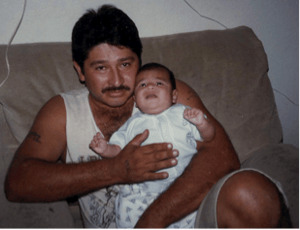
On October 8, 2014, former death row inmate Manuel Velez (pictured with his son before his arrest) was freed from a Texas prison, following a “no contest” plea to a lesser charge on August 25. Velez had been convicted of killing his girlfriend’s one-year-old son but consistently maintained his complete innocence. Velez’s conviction was overturned in 2013 because his attorney failed to present evidence that the injuries leading to the child’s death were sustained while Velez was 1,000 miles away. Medical records indicated the child’s head ballooned in size in the months prior to his death in a manner that could only have been caused by head injuries. During that time, the child’s mother was the only adult living with him. Velez’s trial was also tainted by prosecutorial misconduct. The prosecution presented a witness who claimed that if Velez were not executed, he would be imprisoned under lax conditions with a risk for escape, making him a “future danger.” The Texas Court of Criminal Appeals said this testimony was false and contrary to known prison regulations, which the prosecution knew. Velez agreed to the no-contest plea so he could rejoin his family without the delay of a retrial, even though a retrial might have fully exonerated him.

Joseph Ard
South Carolina — Conviction: 1996, Released: 2012
Joseph Ard, who spent 11 years on South Carolina’s death row and a total of 19 years in confinement, was freed from prison on July 31. Ard was sentenced to death for the 1993 shooting of his pregnant girlfriend. After his conviction, new lawyers unearthed evidence that corroborated Ard’s claim that the shooting was accidental, resulting from a struggle with his girlfriend over a gun. Ard was granted a re-trial in 2007, and his lawyers presented scientific testimony that his girlfriend had gunshot residue on her hands, supporting Ard’s account of a struggle. The jury found Ard guilty of involuntary manslaughter, and the judge sentenced him to time served. Aimee Zmroczek, one of Ard’s lawyers, said, “The state Supreme Court once upheld his death sentence, so if that decision hadn’t been overturned, he might have been put to death by now.” Ard was the first person in South Carolina to be sentenced to death for murder involving an unborn child. The prosecution did not seek the death penalty in the re-trial.
(J. Monk, “Inmate goes from Death Row to freedom,” The State, July 31, 2012).
Ndume Olatushani
Tennessee — Conviction: 1985, Released: 2012
On October 3, 1983, Memphis grocery store manager, Joe Belenchia, was shot and killed. Ndume Olatushani (formerly Erskine Johnson) was in St. Louis at the time with his children, having attended a birthday party for his mother the night before. Olatushani was convicted based on an in-court identification by an alleged eyewitness and testimony by a cousin asserting he had come to her house in Memphis the night before the murder in a stolen car that was involved in the killing and that he had previously told her that he had stolen cars from the airport. Police also claimed to have found his palm print in the getaway vehicle.
The Tennessee Court of Criminal Appeals overturned Olatushani’s conviction in December 2011 and granted him a new trial. The court found that Shelby County prosecutors had withheld numerous exculpatory documents, including: evidence that one grocery store customer had been shown 24 photographs, including a photograph of Olatushani, and picked out a photograph of Michael Brown instead; a second witness, who testified at the trial, had been shown a photo lineup that included a photograph of Olatushani, but identified Brown and Charles Keller; a witness who had identified the getaway car as one that a prostitute working for Brown’s brother, Eric, had used; evidence that the Browns and Keller were involved in a car theft ring that stole rental cars from the St. Louis Airport; a police report showing that Olatushani’s fingerprints did not match any of the fingerprints found in getaway car; and (6) a police report on the fingerprints from the getaway car that did not record any prints having been taken from the location from which police said they had found Olatushani’s palm print.
On June 1, 2012, Olatushani was released, after having served nearly 27 years in prison (19 of which were on death row) when he took an Alford plea. To avoid potentially serving several more years in the Shelby County jail awaiting a new trial and taking his chances with another jury, Ndume took the plea deal. This deal required that he plead guilty to second-degree murder, while, at the same time, allowed him to maintain his innocence. In exchange, he was sentenced to time served and was released.
(Tennesseans for Alternatives to the Death Penalty Newsletter, June 6, 2012; see “Cleary Team One Step Closer to Winning Ex-Death Row Inmate’s Freedom,” AmLaw Daily, Dec. 15, 2011).
Larry Smith
Alabama — Conviction: 1995, Released: 2012
Larry Smith was sentenced to death in 1995 for a murder related to a robbery. His conviction hinged on a statement he made after 4 hours of interrogation. In violation of police guidelines, his interrogation was not recorded, and Mr. Smith later said his admission of involvement in the crime was coerced and influenced by threats made to prosecute his wife. No physical evidence or eyewitness account linked Mr. Smith to the murder, and a witness, who said Smith hatched a plan to rob the victim, was later implicated in planning the crime himself. In 2007, an Alabama Circuit Court ordered a retrial, and a plea deal was reached in April 2012 that allowed Mr. Smith to be released after pleading guilty to conspiracy to commit robbery. The murder charges against him were dropped.
Listen to a podcast interview with Jennifer Whitfield of Covington & Burling, who worked on Mr. Smith’s case. Brian White of the law firm of White & Oakes LLC in Decatur, Alabama, was also part of the legal team that led to Mr. Smith’s release. In the podcast interview, Ms. Whitfield discusses the failures that led to Mr. Smith’s conviction and how some of those problems, including inadequate representation and coerced confessions, affect the death penalty system at large.
(DPI Podcast #20: Jennifer Whitfield Interview, posted May 24, 2012; ” Covington Secures Release of Death Row Inmate,” Press Release, April 12, 2012; Smith v. Alabama, No. CC95-200104, Jan. 12, 2007 (Marshall County Circuit Court) (Findings of Fact and Conclusions of Law); see also S. Michels, “Death Penalty Appeal Without a Lawyer,” ABC News, June 11, 2007).
Edward Lee Elmore
South Carolina — Conviction: 1982, Released: 2012
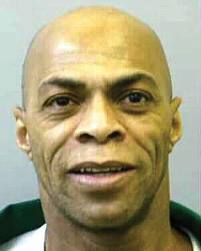
Edward Lee Elmore was released on March 2, 2012, after spending 30 years in prison, 28 of them on death row. He had been tried and convicted three times for the murder of Dorothy Edwards, but all three convictions were overturned on appeal. In 2010, his sentence was reduced to life in prison because his mental disabilities and low IQ exempted him from the death penalty. Elmore’s appellate lawyers discovered evidence that prosecutors had withheld that pointed to his possible innocence. State officials had repeatedly claimed the evidence had been lost. The evidence included a hair sample collected from the crime scene. After being tested for DNA, the evidence suggested that an unknown Caucasian man may have been the killer. In November 2011, the U.S. Court of Appeals for the Fourth Circuit granted him a new trial because of the prosecutorial misconduct in handling the evidence. The court found there was “persuasive evidence that the agents were outright dishonest,” and there was “further evidence of police ineptitude and deceit.”
Elmore’s case is the subject of the 2013 book, Anatomy of Injustice: A Murder Case Gone Wrong by Raymond Bonner.
(R. Bonner, “When Innocence Isn’t Enough,” New York Times, March 2, 2012; R. Shiro, “Ex-death row inmate in SC walks out a free man,” Associated Press, March 2, 2012; C. Peters, “Judge spares longest-serving death row inmate,” Spartanburg Herald Journal, February 5, 2010).

Damien Echols
Arkansas — Conviction: 1994, Released: 2011
Echols was freed from death row and two co-defendants were freed from prison in Arkansas on August 19 after almost two decades of maintaining their innocence for the murder of three children in 1993. Echols, along with Jason Baldwin and Jessie Misskelley, were granted an opportunity to enter a special plea in which they continued to assert their innocence but acknowledged that the state could likely convict them again in a retrial. DNA evidence that emerged after their trial did not match them to the scene of the crime. The defendants, who came to be known as the West Memphis Three (pictured) were convicted of the 1993 murders of three 8‑year old Cub Scouts. Misskelley is borderline “mentally retarded,” and confessed to the crimes after a nearly 12-hour interrogation. Misskelley implicated Echols and Baldwin, though portions of his confession did not match details of the case. Echols was sentenced to death, and Baldwin and Misskelley were given life sentences. All three were credited with time served and released.
The disturbing nature of the murders led investigators to believe that it was related to a satanic ritual. Investigators subsequently focused their attention on Damien Echols who was at the time a troubled teenager who practiced Wicca. Learn more about the case here.
(J. Nuss, “Arkansas judge accepts plea deal, frees Memphis 3,” The Associated Press, August 19, 2011; C. Robertson, “Deal May Free ‘West Memphis Three’,” The New York Times, August 19, 2011).
Dennis Counterman
Pennsylvania — Conviction: 1990, Released: 2006
Dennis Counterman was freed from a Pennsylvania courtroom on October 18, 2006 after serving many years on the state’s death row. Counterman had been convicted and sentenced to death in 1990 for allegedly setting a fire in his own house that resulted in the death of his three children. That conviction was overturned in 2001 because prosecutors had withheld evidence from the defense indicating that the oldest child had a history of fire-setting.
At Counterman’s original trial, the prosecution witnesses said that a burn pattern was discovered that indicated an accelerant had been used in setting the fire, even though no accelerant was found. At later hearings, however, an expert hired by the prosecution said that the prosecution’s theory of how the fire started “is not properly supported by today’s standards.” Rather than face the uncertainty of another trial, Counterman agreed to enter an Alford plea, that is one in which the defendant does not admit guilt but agrees that the prosecution might have been able to convince a jury of his guilt. The plea was to a charge of third-degree murder and carried a maximum term of 18 years in prison. Since Counterman had already served the maximum time, he was released immediately by Lehigh County Judge Lawrence Brenner. After his release, Counterman said, “I am more frustrated than angry. I spent all this time for something I didn’t even do.”(The Morning Call (PA), Oct. 19, 2006).
Read “Death Row to Freedom” by Debbie Garlicki, The Morning Call, October 19, 2006
See “Sentence Thrown Out Over Withheld Evidence” by Raymond Bonner, The New York Times, August 30, 2001. See also Maurice Possley’s article in the Oct. 18, 2006 edition of the Chicago Tribune about faulty arson investigations in other cases.

Donald Paradis
Idaho — Conviction: 1981, Released: 2001
After spending 14 years on death row, Donald Paradis was released from prison when his 1981 murder conviction was overturned. Judge Gary Haman, who originally sentenced Paradis to death, came out of retirement to accept Paradis’ plea to moving the body after the murder. Paradis, who always maintained that he was not involved in the slaying of Kimberly Anne Palmer, was sentenced to 5 years and released for time already served. The deal came after a federal court of appeals ruling that Paradis was denied a fair trial because prosecutors withheld potentially exculpatory evidence. Paradis was scheduled for execution three times before his sentence was commuted to life imprisonment in 1996 by then-Governor Phil Blatt who had doubts about Paradis’ guilt. Paradis’ trial lawyer, William Brown, never studied criminal law, never tried a felony case, and never tried a case before a jury. While representing Paradis, Brown also worked as a police officer. His defense lasted only three hours. In addition, Dr. Brady, the pathologist who performed the autopsy of Ms. Palmer, testified that Palmer had been killed in Idaho, not in Washington where Paradis had already been acquitted of the murder. Dr. Brady was fired as a medical examiner soon after the Paradis trial when it was discovered that he had sold human tissue for profit and saved human blood, collected during autopsies, for use in his garden.
(Associated Press, 4/11/01 and New York Times, 4/12/01) Read “Death Row Survivor” by Bob Herbert, The New York Times, April 12, 2001.
Lee Perry Farmer
California — Conviction: 1992, Released: 1999
Farmer was acquitted at a re-trial in California of capital murder. He had spent 9 years on death row. He was, however, convicted of burglary and being an accessory to murder. He was credited with time already served and was subsequently released. A federal court had overturned his first conviction because of ineffective defense representation. Another man confessed to the murder (Sacramento Bee, 1/18/99).
Read “Life After Death Row” by Mike Kataoka, The Press-Enterprise, January 22, 1999
Andrew Mitchell
Texas — Conviction: 1981, Released: 1993, Returned to prison and then re-released: 1999
Mitchell was awarded $40,000 from Smith County, Texas for withholding evidence at his trial which led to his death sentence in 1981. He spent 13 years on death row before the Texas Court of Criminal Appeals threw out his conviction. Mitchell pleaded guilty to conspiracy to commit murder and was given a 31 year sentence. (Dallas Morning News, 1/19/99) He was then released to a halfway house in early 1999 after being given credit for time served.
See “Former Death-Row Inmate Awaits Trial” Lubbock Avalanche-Journal, September 14, 1997.

Paris Carriger
Arizona — Conviction: 1978, Released: 1999
Carriger was scheduled to die on December 6, 1995 for a murder he steadfastly maintains he did not commit. Another man, Robert Dunbar, twice confessed that he lied at Carriger’s trial, and that it was he who committed the murder. As a result of his original trial testimony against Carriger, Dunbar was given immunity for other charges. Dunbar has since died. A three judge panel of the 9th Circuit U.S. Court of Appeals upheld Carriger’s death sentence, noting that while his case raised doubts, he must prove by clear and convincing evidence that “he is unquestionably innocent.” Review of the case by the entire 9th Circuit was granted in February 1997. Carriger was granted a new trial by the 9th Circuit in December 1997 because of the new evidence. In January 1999, he accepted a plea to a lesser offense and was immediately released from prison.
Read “The Wrong Man” by Beth Hawkins and Kristin Solheim, Tuscon Weekly, December 1993.
Victor Jimenez
Nevada — Conviction: 1987, Released: 1999
Jimenez’s first trial in 1987 ended in a hung jury. A second trial convicted him and sentenced him to death for the stabbing death of two men in a North Las Vegas bar. The Nevada Supreme Court unanimously granted him a new trial in 1996 because of police misconduct including false testimony bordering on perjury. Rather than face the risk of a new trial, Jimenez reluctantly entered a special plea, without admitting his guilt, on June 9, 1998 to second degree murder. He will be required to serve an additional 18 months in prison and has agreed not to sue those responsible for putting him on death row.
Read “Death Row Tenant for 10 Years Preparing to Taste Freedom Again” by Caren Benjamin, Las Vegas Review Journal, June 10, 1998.
Charles Munsey
North Carolina — Conviction: 1996, Died in prison: 1999
In May, 1999, Superior Court Judge Thomas Ross threw out Munsey’s murder conviction and ordered a new trial for the 1993 beating death of Shirley Weaver. The judge cited evidence that the state’s key witness had lied, that prosecutors had withheld exculpatory evidence, and that another man’s confession to the crime was probably true. The state decided not to appeal Judge Ross’s ruling and indicated it planned to indict the man who confessed to the murder. Munsey may have been re-tried, perhaps for a lesser charge involving the sale of the gun used in the murder. Munsey died in prison before an official decision was made on dropping the charges against him or retrying his case.
Read “DA Turned Blind Eye to Evidence Snitch Lied” by Joseph Neff, The News & Observer, January 12, 2006

James “Bo” Cochran
Alabama — Conviction 1976, Acquitted of capital charge: 1997
Bo Cochran was convicted in 1982 of the murder of a Stephen Ganey, the assistant manger of a grocery store. Upon his conviction, Cochran told the judge, “I did not kill Mr. Ganey.… When will I get justice in the courtroom?” (Birmingham Post-Herald, December 2001). The 1982 trial was Cochran’s third trial. His first trial ended in a mistrial, and the second trial, which resulted in a conviction, was reversed and remanded for a new trial after the U.S. Supreme Court overturned Alabama’s death penalty statute (Cochran v. Herring, 43 F.3d 1404, 1404 n.1 (11th Cir. 1995). The 1982 conviction was also overturned. The U.S. Court of Appeals for the Eleventh Circuit upheld a District Court’s decision to overturn the conviction, stating that “in [Cochran’s] 1982 trial race was a determining factor in the prosecution’s exercise of its peremptory challenges (Id. at 1411 (internal citations omitted)). Cochran, who is black, was being tried for the murder of a white person, and the Eleventh Circuit found that during Cochran’s previous trials, the district attorney’s office that prosecuted his case had used an informal practice in peremptory challenges of striking black jurors based on their race. The Eleventh Circuit ordered a new trial for Cochran in 1995. Cochran was retried in 1997 and acquitted by the jury of capital murder. At re-trial, defense attorney Richard Jaffe pointed out to jurors that there were no eyewitnesses to the murder and that it would have been impossible for Cochran to move the victim’s body under a trailer in a nearby mobile home park while being chased by police. (Birmingham Post-Herald, December 2001).
Cochran was originally included on DPI’s Exoneration List, but after further research, he was removed (Nov. 2010) because he had conceded guilt, against his attorney’s advice, to a robbery charge related to the original crime.
Mitchell Blazak
Arizona — Conviction: 1974, Released: 1994
Blazak was originally convicted of a murder in which a ski-masked gunman killed a bartender and a customer at a bar in Tucson in 1973. The conviction was based largely on the testimony of a small time con man, Kenneth Pease, who was arrested for a number of felonies in New Mexico and Arizona. Pease testified after being granted immunity. A federal court in 1991 termed Pease’s testimony to be “a mass of contradictions.” The court also ruled that the trial judge had failed to ensure that Blazak was competent to stand trial. Rather than pursue a new trial, the prosecutor offered a no contest plea in September, 1994, which allowed Blazak to be released before the end of the year. There was some evidence that a deputy sheriff named Michael Tucker planted hair evidence in the case. Three days after Blazak walked out of prison, Tucker was arrested for car theft.
Anthony Scire
Louisiana — Conviction: 1985, Released: 1994
Scire was sentenced to death for hiring Clarence Smith to murder a police informant. The chief witnesses at the trial were members of a motorcycle gang given immunity for this and other crimes in exchange for their testimony. The convictions of both Scire and Smith (see #56 in Innocence Report) were overturned. At retrial, Smith was acquitted. Scire pleaded guilty to manslaughter, while maintaining his innocence. He was immediately released in exchange for time served.
John Henry Knapp
Arizona — Conviction: 1974, Released: 1992
Knapp was originally sentenced to death for an arson murder of his two children. He was released in 1987 after new evidence about the cause of the fire prompted a judge to order a new trial. In 1991, his third trial resulted in a hung jury. Knapp was again released in 1992 after an agreement with the prosecutors in which he pleaded no contest to second degree murder. He has steadfastly maintained his innocence. See K. Smethurst, “Knapp Update: “Innocent Man,” The American Lawyer, April 1987, at 8; P. Manson & B. Whiting, “Knapp to Go Free in Fire Deaths, Sources Say Will Avert 4th Trial in Plea,” Ariz. Republic, Nov. 17, 1992, at A1.

Sonia Jacobs
Florida — Conviction: 1976, Released: 1992
Jacobs and her companion, Jesse Tafero, were sentenced to death for the murder of two policemen at a highway rest stop in 1976. A third co-defendant received a life sentence after pleading guilty and testifying against Jacobs and Tafero. The jury recommended a life sentence for Jacobs, but the judge overruled the jury and imposed death. A childhood friend and filmmaker, Micki Dickoff, then became interested in her case. Jacobs’ conviction was overturned on a federal writ of habeas corpus in 1992. Following the discovery that the chief prosecution witness had given contradictory statements, the prosecutor accepted a plea in which Jacobs did not admit guilt, and she was immediately released. Jesse Tafero, whose conviction was based on much of the same highly questionable evidence, had been executed in 1990 before the evidence of innocence had been uncovered.
See “Journey of Hope…From Violence to Healing: Sonia Jacobs”. Read “Women on Death Row” by Claudia Dreifus, Ms. Magazine, Spring 2003.
Robert Lewis Wallace
Oklahoma — Conviction: 1980, Released: 1987
Wallace was convicted and sentenced to death for the slaying of a police officer, despite his claim that the shooting was accidental and that he was acting in self-defense because he was beaten by the officers. The 11th Circuit ordered a retrial because Wallace had not been competent to stand trial. He was acquitted at the retrial because it was found that the shooting was accidental. While he was acquitted of his death-eligible charge on retrial, he was convicted again on several other charges that were factually intertwined with the death-eligible charge.
Wallace was originally included on DPI’s Innocence List, but after further research, he was removed (Aug 2026) because he was found guilty of non-murder charges related to the original crime.
(Wallace v. Kemp, 757 F.2d 1102 (1985) and Associated Press, 6/18/87).
Larry Dean Smith
Oklahoma — Conviction: 1978, Released: 1984
Smith was convicted of the murder of a man who burned to death in a camper pick-up truck. Although he at first admitted his involvement in the related robbery, he maintained he had nothing to do with the murder. The U.S. Supreme Court vacated his death sentence, and the Oklahoma Attorney General recommended that the murder conviction be set aside. On remand, the Oklahoma Court of Criminal Appeals refused to uphold Smith’s conviction for the robbery.

Lloyd Schlup
Missouri — Conviction: 1985, Not Released
Schlup was convicted in 1985 of a murder while in prison. However, a prison videotape shows him to be in the cafeteria around the time of the murder at a different location. One prison guard has testified that the tape, along with his observation of Schlup just before he went to the cafeteria, prove he could not have been present at the murder. Twenty other witnesses also swear that he was not at the scene of the crime. The U.S. Supreme Court gave Schlup the opportunity for a hearing concerning his new evidence, despite the fact that he had exhausted his ordinary appeals. Following the hearing in federal District Court in December 1995, the court held that no reasonable juror would have found Schlup guilty. On May 2, 1996, Schlup was granted a writ of habeas corpus on the ground that his original trial attorney failed to adequately represent him. The State of Missouri unsuccessfully attempted to apply the new federal habeas corpus law which was signed on April 24, 1996 to Schlup’s case. Under the new law, Schlup probably would have been executed. On the second day of his re-trial, Mar. 23, 1999, Schlup agreed to plead guilty to second degree murder to avoid the danger of another death sentence. Schlup’s appellate lawyer, Sean O’Brien, said he remained convinced of Schlup’s innocence.
Read “Probably Innocent, Almost Executed” by Stuart Taylor Jr., Court TV: Legal Times, January 1, 1996. See “Invitation to an Execution” by James Willwerth, Time Magazine, November 22, 1993.

Joseph Spaziano
Florida — Conviction: 1976, Not Released
Spaziano was tried for the murder of a young woman which had occurred two years earlier. No physical evidence linked him to the crime. He was convicted primarily on the testimony of a drug-addicted teenager who, after hypnosis and “refreshed-memory” interrogation, thought he recalled Spaziano describing the murder. This witness subsequently admitted that his testimony was totally unreliable and not true. Hypnotically induced testimony is no longer admissible in Florida. Death warrants had repeatedly been signed for Spaziano, even though the jury in his case had recommended a life sentence. In January, 1996, Florida Circuit Court Judge O.H. Eaton granted Spaziano a new trial, and this decision was upheld by the Florida Supreme Court on April 17, 1997. In November 1998, Spaziano pleaded no contest to second degree murder and was sentenced to time served. He remains incarcerated on another charge.
Read “Two Newspapers, Two Sides to the Same Story” by David Barstow, The American Editor, September 27, 1996. See “Anatomy of a Death Penalty Case” by Tena Jamison Lee, American Bar Association: Human Rights, Summer 1996.